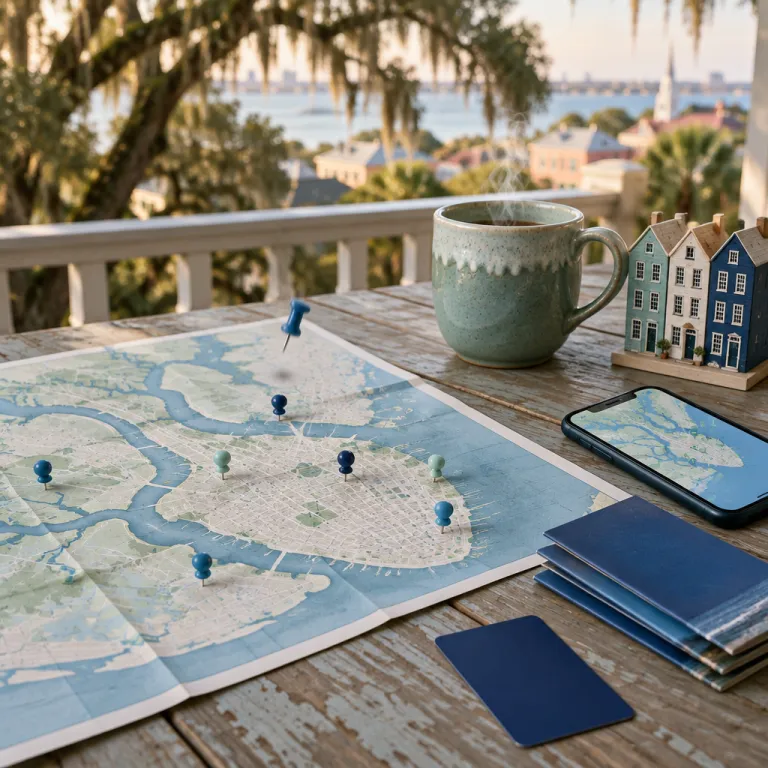
Start with your mornings, not your hotel search
Before you type where to stay in Charleston SC into any website, picture your first steps after breakfast. If your ideal stay in Charleston means walking straight from your bedroom to a cobbled street lined with church steeples and live oaks, you belong in the compact historic downtown rather than on a highway near the airport. If you imagine loading a beach bag into the car at dawn and driving toward Folly Beach or Kiawah Island for quieter stretches of sand, then a calm base in Mount Pleasant or West Ashley will usually suit you better than a lively address on King Street.
The central question is simple: do you want to walk or drive after your first coffee in the Holy City? A walk-first mindset points you toward the Historic District, South of Broad, the French Quarter, and the blocks around Marion Square, where most hotels in Charleston sit within a ten- to fifteen-minute stroll of serious dining and the Charleston Harbor. A drive-first approach makes more sense if you plan repeated trips to Folly Beach, Isle of Palms, or Daniel Island, where the most popular stretches of sand and marsh sit roughly 10 to 18 miles from downtown and are a straightforward run over the bridges from a pleasant, low-key location on the mainland.
Every neighborhood in Charleston trades something away, and honest travelers accept that before they compare rates or amenities. A waterfront room with sweeping photos of the harbor will cost more and may place you farther from everyday restaurants, while a modest bedroom in North Charleston offers space and parking but little charm on the surrounding street. Think of your stay as renting a small slice of the city rather than just a bedroom suite, and choose the slice that matches your days rather than your social media feed.
Historic district, South of Broad and the french quarter
If you want the classic answer to where to stay in Charleston SC, the Historic District and South of Broad still define it. Here the city tightens into a walkable grid of narrow street views, pastel façades, and hidden gardens, with the French Quarter and its galleries forming a quiet buffer between the cruise terminal and Marion Square. You stay Charleston-style here by trading space for atmosphere: bedrooms run smaller, but every corner offers a church spire, a carriage clatter, or a glimpse of Charleston Harbor at the end of the block.
On King Street north of Marion Square, Hotel Bennett anchors one of the most visible corners of downtown Charleston, facing the park where festivals, farmers markets, and student life from the College of Charleston all collide. As of late 2024, it operates as an independent luxury property; always confirm current ownership or brand affiliation on the hotel’s own site, as these details can change. This stretch of King Street is dense with restaurants, bars, and art-hotel-style properties that lean into curated photos, layered interiors, and high-touch amenities rather than resort sprawl. If you want a refined base for exploring Sullivan’s Island and the nearby beaches, compare these central King Street locations with quieter stays closer to the islands and weigh the trade-off between nightlife and easier parking.
South of Broad and the French Quarter suit travelers who care more about atmosphere than amenities lists or aggressive offers. You will find fewer large suite layouts and more creaky staircases, fewer on-site restaurants and more reliance on nearby dining in the city’s narrow lanes. For many first-timers, though, a compact bedroom or small bedroom suite here feels worth the higher rates—often in the $350 to $600 per night range in peak season, based on recent publicly listed prices—because every evening stroll becomes its own quiet tour of historic downtown.
Upper King and the new edge of downtown energy
Walk north on King Street past Marion Square and the mood shifts from steeples to stemware. This is Upper King, the part of downtown Charleston where late-night restaurants, cocktail bars, and music venues pack into former warehouses and narrow storefronts. If your version of where to stay in Charleston SC includes closing the bar rather than catching the sunrise, this is your most practical location.
The Lowline Hotel, a Hyatt property created from a former Hyatt Place near the edge of the Historic District, sits just beyond the densest blocks and gives you a modern base with quick access to both historic downtown and the emerging Lowline greenway. Brand affiliations and names can evolve, so verify current details directly with the hotel before you book. Rooms here lean contemporary, with clean-lined amenities and efficient bedroom layouts that suit travelers who treat the hotel as a launch pad rather than a retreat. You are close enough to walk back from late dining on King Street, yet far enough that street noise usually softens by the time you reach your suite or standard bedroom.
Families who want energy but not chaos should look carefully at room details, floor plans, and recent guest photos before booking in this part of Charleston. Some hotels offer larger bedroom suite configurations that work well with children, while others skew toward couples and groups of friends who prioritize nightlife over quiet. For a deeper look at how to balance family needs with central locations and thoughtful amenities, compare Upper King options with calmer neighborhoods near the beaches and factor in typical nightly rates, which often range from about $250 to $450 depending on season, events, and last-minute demand.
Waterfront stays and the pull of the harbor
For some travelers, choosing a place to stay in Charleston is really a question about water. If you fall into that camp, look closely at the growing cluster of hotels along the eastern edge of downtown, where Charleston Harbor presses against Concord Street and the piers. Here the city feels more open, with long views across the water taxi routes toward Mount Pleasant and the USS Yorktown at Patriots Point.
The Cooper, a planned luxury hotel on Concord Street, is designed to bring a resort-like calm to the waterfront with a spa, a pool, and several dining options facing the harbor. As of late 2024, it remains in the development pipeline; opening timelines and final amenities should always be checked against the latest information from the developer or property website. Rooms and suites are expected to lean generous, with many bedroom suite layouts oriented toward the water rather than the street, and an amenities list aimed at travelers who plan to stay on property for long stretches. You will likely pay a premium for that view—waterfront hotels in this area often advertise rates in the $400 to $700 per night band in high season—but you gain a front-row seat to the working harbor and easy access to the water taxi that shuttles across to Mount Pleasant and back.
Across the harbor in Mount Pleasant, several properties sit near the pier and the Patriots Point area, giving you a quieter stay-Charleston alternative with quick drives to both downtown and the beaches. From here, Folly Beach and Isle of Palms are realistic day trips, commonly 25 to 40 minutes by car in typical traffic, while Kiawah Island remains a longer, more deliberate excursion of about an hour. If you choose a harbor-facing location, study the hotel website carefully for details on parking, resort fees, and shuttle schedules—downtown garages often run roughly $20 to $40 per night—and consider how those costs compare with slightly inland options that may include self-parking in the nightly rate.
Mount Pleasant, the beaches and the car first stay
Travelers who care more about sand than steeples often find that Mount Pleasant answers the where to stay in Charleston SC question better than downtown. This side of Charleston Harbor feels residential and measured, with wide roads, live-oak-shaded subdivisions, and a steady flow of locals heading toward the bridges for work. You trade the ability to walk to every restaurant for quick drives to Isle of Palms, Sullivan’s Island, and even Folly Beach if you time the traffic well.
Hotels here tend to emphasize parking, pools, and family-friendly amenities over ornate lobbies or art-hotel theatrics. You will find straightforward bedroom layouts, some generous bedroom suite options for longer stays, and rates that often undercut similar quality in the Historic District by a noticeable margin—think roughly $180 to $320 per night instead of $300-plus, based on recent publicly available listings. For many visitors, especially families and groups, that combination of space, value, and beach access makes a Mount Pleasant location feel more pleasant than a cramped room above a busy street in downtown Charleston.
Farther out, Kiawah Island and Daniel Island offer more controlled environments, with resort communities and planned neighborhoods that appeal to travelers who want golf, cycling, and long, quiet walks more than they want a nightly choice of restaurants. These areas sit firmly in the drive-first category, so you should accept that every visit into Charleston will involve a car and parking, often 12 to 25 miles each way depending on your exact starting point. If you choose this style of stay, think of downtown as a day trip rather than a default, and let the beach, the marsh, and the night sky become your primary amenities.
West Ashley, North Charleston and the budget calculus
Not every answer to where to stay in Charleston SC involves a historic façade or a harbor view. West Ashley and North Charleston offer a different equation, one where you trade charm and walkability for lower rates, larger rooms, and easy highway access. These areas suit travelers who see the hotel as a practical base rather than a central character in the trip.
In West Ashley, you are a short drive from downtown Charleston, the plantations along the Ashley River, and the routes that lead toward Folly Beach. Many hotels here sit in commercial corridors, with predictable amenities, ample parking, and straightforward bedroom or suite layouts that work well for road trips and quick stopovers. North Charleston stretches this logic further, placing you near the airport, the convention center, and big-box dining, which can be useful if your stay revolves around events or early flights rather than slow walks through the Historic District.
Wherever you land on this spectrum, remember that the right location in the Holy City is the one that matches your days, not your feed. A quiet bedroom in a highway-side hotel can be the perfect choice if it funds more meals in the city’s best restaurants, just as a small room above King Street can be worth every cent if you live for nightlife. In Charleston, the smartest travelers pick the neighborhood first, the address second, and let the hotel become the frame for the trip, not the picture itself.
FAQ
Is it better to stay in the historic district or in Mount Pleasant
The Historic District works best if you want to walk everywhere, eat in central restaurants, and feel immersed in the oldest part of Charleston. Mount Pleasant suits travelers who plan frequent beach days, prefer easier parking, and value larger rooms at lower rates. Choose the Historic District for mostly car-free days, and Mount Pleasant for a car-first, beach-focused stay.
Which Charleston neighborhood is best for a first time visit
For a first stay in Charleston, most travelers do well in the historic downtown core around King Street, Marion Square, and the French Quarter. This area balances walkability, dining options, and access to major sights like Waterfront Park and the Battery. You can add day trips to Folly Beach or Sullivan’s Island by car or rideshare without giving up the charm of a central base.
How far are the main beaches from downtown Charleston hotels
From most downtown Charleston hotels, Folly Beach sits roughly a 25- to 35-minute drive away, or about 11 miles, depending on traffic and your exact starting point. Isle of Palms and Sullivan’s Island, reached via Mount Pleasant, usually take a similar amount of time by car, often 25 to 40 minutes for roughly 12 to 16 miles. Kiawah Island is farther, commonly around an hour’s drive and roughly 25 miles, so it works better as a dedicated day trip or a separate stay.
Do I need a car if I stay in the historic district
If you stay in the Historic District or near Marion Square, you can comfortably explore most central sights, shops, and restaurants on foot. A car becomes useful only for beach days, plantation visits, or trips to Mount Pleasant and beyond. Many travelers choose to rely on rideshares for those outings to avoid parking costs and downtown traffic, especially when hotel parking can add about $20 to $40 per night in garages or on-site lots.
Are waterfront hotels in Charleston worth the higher rates
Waterfront hotels along Charleston Harbor, such as those on Concord Street, charge more because they offer direct harbor views, easy access to the water taxi, and a calmer atmosphere than some central streets. They are worth the premium if you plan to spend time enjoying the property, the pool, and the scenery. If you expect to be out from morning to night, a well-located inland hotel may offer better value while still keeping you close to the Historic District.