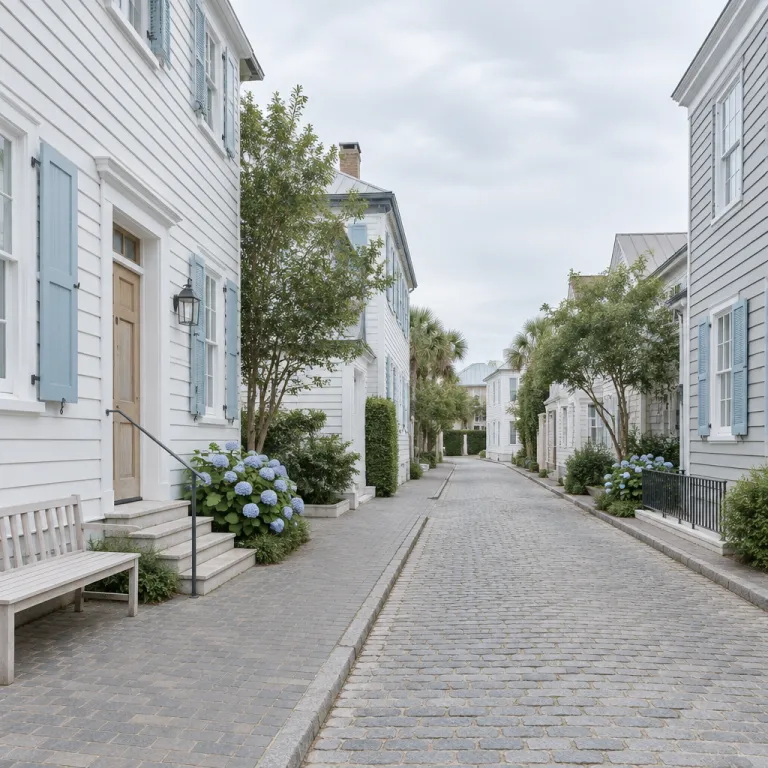
Why Charleston’s real story starts on the sidewalk
Charleston rewards the traveler who slows down and walks. Carriage rides in this city offer a pleasant overview, yet they flatten Charleston history into a single scripted loop that glides past the same polished landmarks. A Charleston Historic District walking itinerary, built around your hotel and your pace, lets the streets talk back.
From a carriage, the view of historic Charleston is wide but distant. You roll along King Street or East Bay Street at carriage speed, hearing a guide gesture toward a church steeple or a house façade while traffic presses in and the next tour waits behind you. On foot, a flexible walking route through downtown Charleston lets you stop under a live oak, read the small brass plaque about a Civil War skirmish, and feel how the war still shapes the street grid and the quiet back lanes.
The carriage circuit is optimized for efficiency, not intimacy. Horses cannot squeeze into the narrow alleys of the French Quarter or the tiny lanes of Harleston Village, so the official tours Charleston permits tend to circle the same broad arteries of Charleston city. A Charleston Historic District walking tour, whether self guided or with a local guide, can pivot down a side street when a church bell rings, or linger in a courtyard when the light turns gold and the views Charleston offers suddenly feel private.
Think about what you want from this romantic escape. If you are booking a hotel for a long weekend, you probably want the best mix of history, quiet, and easy access to dinner, drinks, and shopping. A walking focused stay in the historic district lets you step out of your house like inn, turn left toward Rainbow Row or right toward King Street, and shape your own tour of Charleston history instead of inheriting someone else’s script.
There is also the question of ethics and impact. Carriage traffic concentrates weight and noise on a few fragile streets in historic Charleston, where residents already navigate tour buses, cruise passengers, and the constant churn of short term rentals. Choosing guided walking tours or self led walking experiences spreads visitors more gently through the city, respects the residential rhythm of downtown Charleston, and keeps the focus on the architecture instead of the animal pulling you past it.
For couples, walking is not just transport; it is atmosphere. You hear the clink of glasses from a piazza, catch the scent of jasmine from a hidden garden, and pause under a church tower to read a name carved into stone. Those small, unscripted encounters with Charleston history rarely happen at carriage height, and they are exactly what make a Charleston Historic District walking itinerary feel like time well spent.
One more practical point matters when you are choosing a hotel. Carriage tours leave from fixed stands, which means you must shape your day around their schedule and their starting point. When you commit to walking tours instead, you can choose a stay in the French Quarter, on lower King Street, or near East Bay Street and let each neighborhood become its own open air museum.
There is a reason serious architecture lovers and historians walk. They know that the best views Charleston offers are often oblique: a glimpse of a side piazza through an iron gate, or the way a single house tilts toward the breeze along a narrow lane. As one longtime guide likes to tell guests, “A carriage tour gives you the postcard; a Charleston Historic District walking day gives you the footnotes, the contradictions, and the quiet corners where the city finally feels like itself.”
If you want a deeper sense of how private piazzas and side streets reveal the city, read this piece on getting inside the piazzas the carriage route skips. It pairs well with planning a stay that prioritizes guided walking rather than wheels. The argument is simple: Charleston historic streets are legible only at human speed.
What the carriage route misses: single houses, ironwork, and quiet lanes
Charleston is a city built for walkers long before it was a destination for tours. The classic Charleston single house, with its narrow street front and long side piazza, reveals its logic only when you stand at the corner and trace how the rooms catch the breeze. On a Charleston Historic District walking route, you can pause at each house, compare ironwork, and notice how the same historic template bends to different centuries.
Take Rainbow Row as an example. From a carriage, this run of pastel façades on East Bay Street becomes a quick photo stop, a single view framed by a guide’s patter about paint colors and hurricanes. On foot, you can walk the length of Rainbow Row twice, once on the house side to study doorways and fanlights, then again on the harbor side to catch the shifting views Charleston offers across the water toward Fort Sumter and the harbor islands.
The French Quarter works the same way. Carriages are restricted to certain streets, so they skirt the tightest alleys where old warehouses, church yards, and former cotton offices sit shoulder to shoulder. A guided walking tour through this part of historic Charleston can slip into a churchyard, point out a Civil War grave beside a colonial era stone, and show how Charleston history stacks itself vertically in just a few square metres.
Harleston Village, west of King Street, almost never appears on a standard carriage tour. Yet for couples staying in a nearby hotel, this neighborhood offers some of the best walking tours in the city, even when you are simply wandering without a guide. Here, the houses feel more residential, the landmarks are smaller scale, and the experience of Charleston historic streets becomes less about spectacle and more about how people actually live.
Walking also lets you read the ironwork. Many of the finest gates and balconies in downtown Charleston sit slightly back from the street, half hidden by greenery or shadow. On a Charleston Historic District walking loop, you can stop, lean in, and see initials woven into the iron, dates that mark war and peace, and small motifs that echo across multiple houses because the same artisan worked this part of Charleston city for decades.
Then there are the plaques. Carriage guides may gesture toward a landmark, but they cannot slow every time a small bronze marker appears at eye level. When you walk, you can read about a Civil War skirmish on one corner, a jazz musician’s house on the next, and a quiet note about an enslaved person’s resistance carved into the narrative of Charleston history just beyond the main tour route.
Ethics thread through this choice as well. Carriage traffic concentrates noise and waste on a few streets, and residents in historic district blocks along the main tour corridors feel that pressure daily. By choosing walking tours or self guided walking experiences, you distribute your presence more lightly, respect the people who call historic Charleston home, and still enjoy the best views Charleston can offer.
For couples, this slower pace also changes how you remember the trip. Instead of recalling “the carriage tour we took in the United States”, you remember the exact corner of King Street where you ducked into a courtyard, or the church steps where you sat at dusk and listened to bells. Travel memories cling to specific places, and walking lets Charleston’s side streets supply those anchors.
Designing a walking-first stay around your hotel
Choosing the right hotel in Charleston is really about choosing your walking map. If you stay in the French Quarter, your Charleston Historic District walking days will start with cobblestones, church spires, and early morning light on East Bay Street. A stay closer to upper King Street shifts your walking tour toward restaurants, late night energy, and easy access to Harleston Village’s quieter residential lanes.
For a romantic getaway, think in micro itineraries rather than one big march. One loop might start from your hotel near East Bay Street, wander past Rainbow Row, cut through the park at White Point Garden, then drift back through the residential blocks of historic Charleston where jasmine spills over walls. Another walking tour could begin on lower King Street, head toward the Charleston City Market, then slip behind it into smaller streets where the tourist buses thin and the city’s older commercial history still shows in brick and loading doors.
A third loop might focus on churches and war history. From almost any hotel in downtown Charleston, you can design a guided walking route that links St. Michael’s Church, St. Philip’s Church, and the French Huguenot Church, then continues toward the waterfront to connect the Civil War story with the harbor and the distant outline of Fort Sumter. This kind of Charleston Historic District walking day makes the abstract idea of war tangible, because you see how close the front lines once felt to these quiet streets.
Do not forget the harbor itself. A carriage tour cannot take you onto the water, but a walking day can easily fold in a harbor cruise or a ferry to Fort Sumter if you plan your timing. Use this guide on how to plan Charleston harbor cruises around your hotel stay to align your walking tours with time on the water, then return on foot through downtown Charleston as the light softens.
Shopping can be part of the architecture lesson rather than a break from it. King Street offers the best known shopping corridor in Charleston city, but the most interesting experience often lies one block off, where small galleries and local shops occupy historic houses and warehouses. A Charleston Historic District walking loop that zigzags between King Street and its parallel lanes lets you enjoy both the retail energy and the quieter residential feel.
Food should anchor your walking days as much as landmarks. Plan one evening where you walk from your hotel through the historic district to a Lowcountry restaurant, then stroll back along a different route to see how the city changes after dark. For ideas on what to eat between walking tours, this guide to Southern food you must try during your hotel stay pairs naturally with a Charleston Historic District walking itinerary.
Even within a single neighborhood, you can design multiple experiences. One morning, focus your walking tour on the big name landmarks and the classic views Charleston is famous for, like Rainbow Row and the Battery. The next, let your guided walking or self guided wandering concentrate on back lanes, small house gardens, and the subtle shifts between eighteenth century and nineteenth century façades that tell the deeper Charleston history.
When you book, ask the hotel how easy it is to reach key areas on foot. A property that sits within a ten minute walking radius of King Street, the French Quarter, and East Bay Street will give you maximum flexibility to design tours Charleston style, with short loops and frequent pauses. In a city where the best stories hide in side streets, proximity beats amenities every time.
When a carriage still makes sense – and how to walk better
There are moments when a carriage tour earns its place. Travelers with reduced mobility, those visiting in the peak heat of a Charleston summer afternoon, or couples arriving late and wanting a quick orientation may find that a single carriage loop through downtown Charleston provides a useful first sketch. The key is to treat that tour as a rough outline, then let Charleston Historic District walking fill in the details over the next days.
Think of the carriage as a moving balcony. You get a raised view of Charleston city, a sense of how King Street connects to the waterfront and how the church steeples line up against the harbor. What you do not get is the texture of the street underfoot, the chance to pause at a plaque about the Civil War, or the ability to duck into a side lane in Harleston Village when a particular house catches your eye.
Ethically, one carriage tour during a stay is a lighter footprint than multiple loops. The real shift happens when visitors choose walking tours, guided walking experiences, or self designed walking routes for the rest of their time in historic Charleston. That choice reduces carriage congestion on fragile streets, respects residents in the historic district, and still allows you to enjoy the best views Charleston can offer.
To walk better, start early or late. Morning light along East Bay Street and Rainbow Row reveals colors and shadows that vanish by midday, and the streets around White Point Garden feel almost private before the first tour buses arrive. Evening walks through the French Quarter or along King Street let you see how the city changes tempo, with church towers glowing and house windows framing quiet domestic scenes.
Use a mix of guided walking and solo wandering. A professional guide can connect Charleston history, the Civil War, and the evolution of the single house in a way that makes every later stroll richer, while your own unscripted walks let you follow curiosity down any street. In a city where every corner seems to hold a story, that combination of structure and freedom turns a simple walking tour into a layered experience.
Hotels can play a role here too. Many front desks keep maps of recommended walking tours Charleston style, with loops that connect major landmarks, lesser known churches, and small residential squares. When you check in, ask for routes that highlight historic Charleston architecture, quiet back streets, and easy access to both shopping and dining so that your Charleston Historic District walking days feel coherent rather than improvised.
Finally, remember that romance thrives in the unscheduled minutes between landmarks. The most enduring memory of your time in the United States may not be the official tour of Fort Sumter or the scripted story of a carriage guide, but the moment you and your partner paused in a narrow lane, listened to a distant church bell, and watched the light slide across an old brick wall. In Charleston, the real story is not the carriage tour, but the side street it skips.
Key figures that frame Charleston’s walking reality
- Charleston’s Historic District covers roughly 2.6 square kilometres, a compact scale that makes guided walking and self guided walking tours practical for most visitors in reasonable weather (data from City of Charleston planning documents such as the Historic District Design Guidelines).
- More than 1,400 historically significant buildings stand within downtown Charleston, meaning that even a short walking tour will pass multiple registered landmarks on almost every street (National Park Service National Register summaries for the Charleston Historic District listing).
- Tourism reports from Explore Charleston indicate that a majority of overnight visitors stay within or adjacent to the historic district, which places most hotels within an easy 15 minute walk of King Street, the French Quarter, and East Bay Street (see the latest Explore Charleston visitor research reports).
- Fort Sumter National Monument receives several hundred thousand visitors annually, and most reach the site via ferries departing from downtown Charleston, making a combined harbor cruise and Charleston Historic District walking day a common and efficient pairing (National Park Service visitation statistics available through the NPS Stats portal).
- Local preservation groups note that Charleston’s carriage operators are limited by city ordinance to specific routes and time windows, a regulatory framework designed to protect fragile streets and encourage more sustainable walking based exploration of historic Charleston (City of Charleston tourism management policies, including the Tourism Management Plan).