Charleston · Hotels
The Pinch Charleston
We chose this address because it packs three centuries and three restaurants into twenty-two rooms...
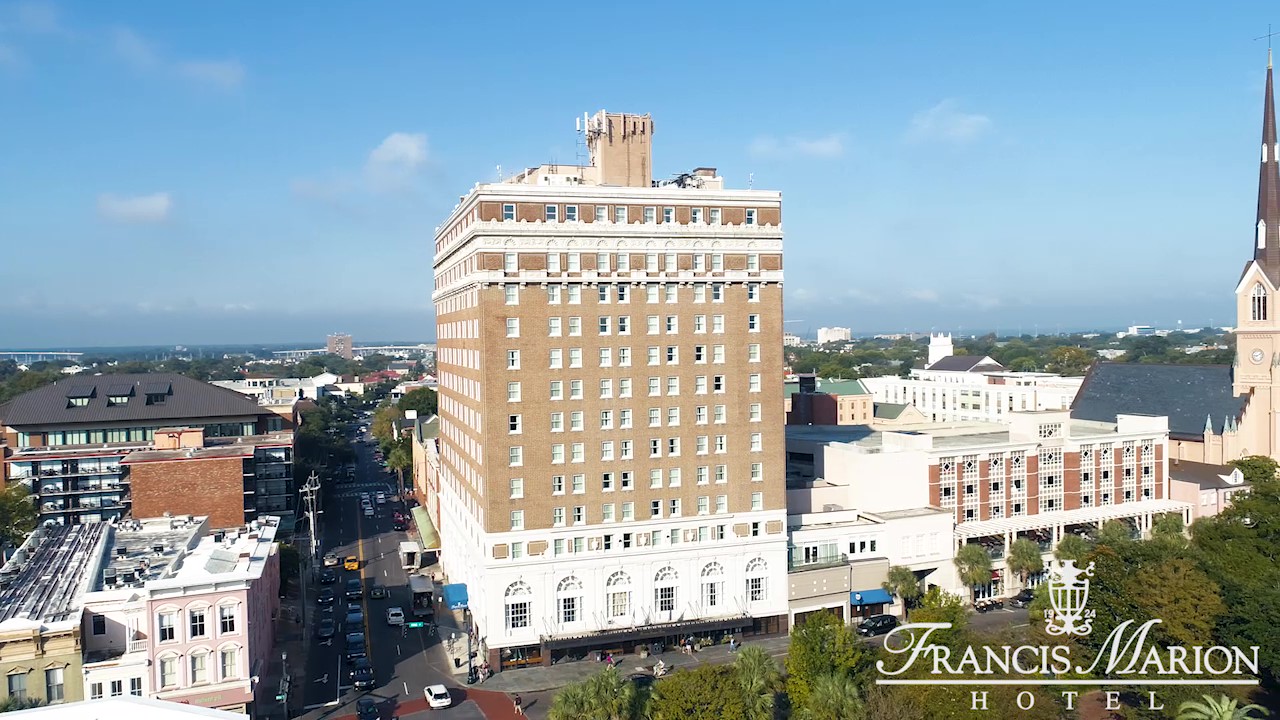
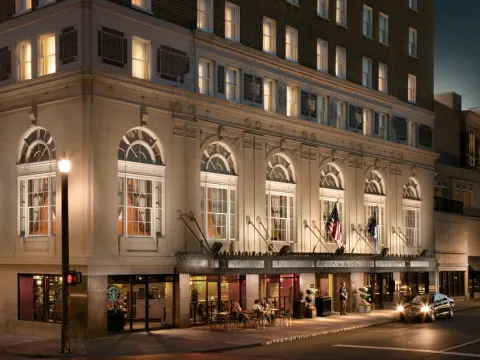
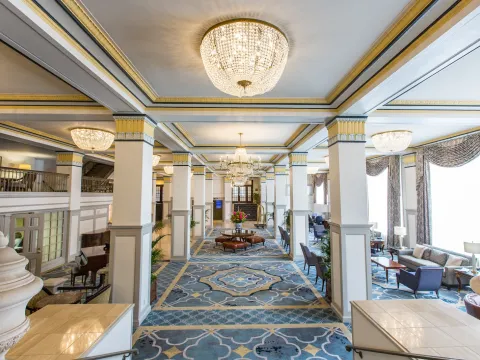
When the Francis Marion opened on King Street in February 1924, architect William Lee Stoddart's twelve-story tower was the largest and grandest hotel in either Carolina, and briefly the tallest building in Charleston. The scale still reads today: a lobby built for a city that wanted to prove it could compete with Atlanta and Savannah, a footprint of 235 rooms that dwarfs the boutique inns two blocks over, and a name borrowed from the Revolutionary War's Swamp Fox rather than a European city or a founder's surname. A $12 million restoration in 1996 and further work the year after brought the building back from a mid-century decline without erasing the scale that made it a landmark in the first place, or the twelve-story silhouette that still stands out against Charleston's mostly low-rise skyline.
We chose this address because it offers something the smaller historic inns cannot: a genuine sense of civic history alongside the room. General Mark Clark, retired president of The Citadel, lived in the penthouse for a decade after 1965, and the hotel has been continuously operating, under one name or another, since a year most of its King Street neighbors were still private houses. The Swamp Fox Restaurant serves the Lowcountry classics its name has promised since a 1955 renovation, and eighteen thousand square feet of event space, including the Colonial Ballroom, means the hotel still does the job it was built for a century ago.
The hotel overlooks Marion Square, the green space that anchors the meeting point between the Historic District's residential blocks and the King Street shopping corridor, putting a guest within a few minutes' walk of both. The College of Charleston campus sits immediately north, the City Market and Rainbow Row a fifteen-minute walk south, and the square itself hosts a Saturday farmers market worth timing a visit around. Rooms on the upper floors, a rarity in a city with strict height limits on newer construction, look out over rooflines that most Charleston hotels can only photograph from ground level.
Price: $$ (premium)
Vibe: Grand, historic, civic
Rooms: 235
Best For: History-minded travelers, groups, guests wanting skyline views
Our Favorite Thing About the Hotel: upper-floor rooms with skyline views most Charleston hotels can't offer
Dining: Swamp Fox Restaurant (Lowcountry cuisine)
Amenities: The Spa of Charleston, 18,000 sq ft of event space including the Colonial Ballroom, fitness center
Attractions: Marion Square (steps away), King Street shopping (on the doorstep), City Market (15 min walk), College of Charleston (adjacent)
The building has changed hands and names more than once, running as a Clarion and later a Westin before returning to independent operation, but each renovation restored rather than replaced: the 1996 restoration earned recognition from the National Trust for Historic Preservation, and the Swamp Fox Room installed during the 1955 works still carries the name today. A guest walking the corridors is walking through the accumulated decisions of nine decades of owners who chose to keep the bones rather than gut them, a rarer outcome than the name-brand takeover most century-old American hotels eventually see.
Charleston's Historic District has held strict building-height limits for decades specifically to prevent another Francis Marion from rising among the church steeples, which makes the hotel's own upper floors one of the only vantage points in the city with a genuine skyline view rather than a rooftop bar squeezed onto a four-story building. A room on a high floor facing Marion Square catches both the green space below and the harbor beyond it, a sightline nothing built downtown since the height-limit era is permitted to match.
We chose this address because it packs three centuries and three restaurants into twenty-two rooms...
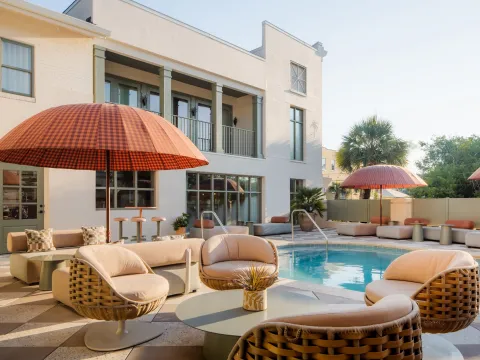
What we like about this hotel is the pool, honestly: a retro-shaped deck lined with...
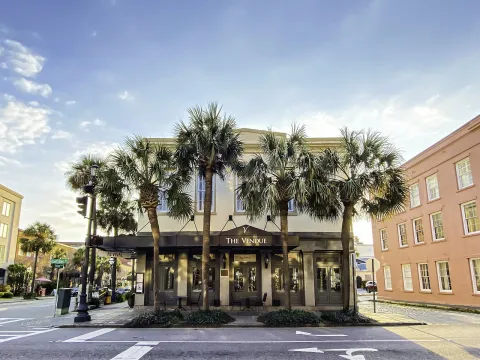
We loved this hotel for treating its two 18th-century warehouse buildings as gallery space first...